.png)

Why Baby Teeth Matter More Than You Think


You’ve probably heard it – or maybe even thought it yourself:
“They’re just baby teeth…won’t they fall out anyway?”
It’s a very common question. After all, primary teeth (commonly referred to as baby teeth) will indeed later be replaced by adult teeth.
However, even though baby teeth don’t last forever, they play a very important development role. They help your child eat comfortably, speak clearly, grow properly, and help make sure adult teeth come in the right way.
Think of baby teeth as placeholders and protectors – they’re setting the stage for your child’s lifelong oral health.
Baby Teeth Keep Your Child Healthy and Comfortable
Baby teeth can absolutely develop cavities, and untreated cavities are not harmless. In fact, cavities in baby teeth often grow faster than in adult teeth!
When decay progresses, it can lead to dental pain, infection, swelling, difficulty eating or sleeping, and emergency visits.
This is why we recommend routine dental examinations to prevent or identify cavities early on. A healthy mouth supports proper nutrition, clear speech development, confidence in smiling, and positive dental experiences early in life.
Baby Teeth Hold Space for Adult Teeth
One of the most important roles of baby teeth is acting as natural space maintainers. Each baby tooth holds a specific amount of space in the jaw to guide the adult teeth into the correct position.
If a baby tooth is lost too early due to decay or infection, the surrounding teeth naturally begin to shift into the empty space. When that space closes, the adult tooth may come in crooked, crowded, or may not have enough room to erupt at all.
To prevent this, we may recommend a space maintainer or early orthodontic guidance to preserve proper alignment. When space is not maintained, more complex orthodontic care may be necessary in the future.
Early Tooth Loss Can Change Jaw Development
Baby teeth help maintain proper chewing function, stimulate jaw growth, and support balanced facial development.
When chewing is compromised on one side due to pain or early loss, children may compensate in way that affect bite development and muscle function.
Healthy Baby Teeth Build Lifelong Habits
Caring for baby teeth is where lifelong oral health truly begins.
When children learn to brush and floss consistently from their very first tooth, those habits become second nature, and they carry them into adolescence and adulthood.
Protecting baby teeth isn’t just about today, it’s about teaching routines, responsibility, and self-care that will safeguard their permanent teeth for the rest of their lives.
Our Take Home Message
Yes, baby teeth will eventually fall out.
But before they do, they:
- Support your child’s speech, nutrition, and growth
- Protect your child from dental disease, pain, and infection
- Maintain critical space for adult teeth
- Influence the complexity of future orthodontic needs
- Build lifelong habits that protect their future smile
Healthy baby teeth lead to healthier adult smiles. Protecting them now prevents bigger problems later.
Share this post
Stay Informed
Explore more blogs

August 3, 2026
Airway Health for Children: Why Breathing Well Matters
When we think about children, we often focus on teeth, nutrition, and school performance. But one of the most important (and commonly overlooked) factors in a child’s development is something much more basic: how they breathe.

May 11, 2026
Teething in Babies: A Guide for Parents
Teething is an exciting milestone, but it can also be a challenging one. If your baby seems fussier than usual, drooling more, or chewing on everything in sight, a new tooth may be on the way!
August 2, 2026
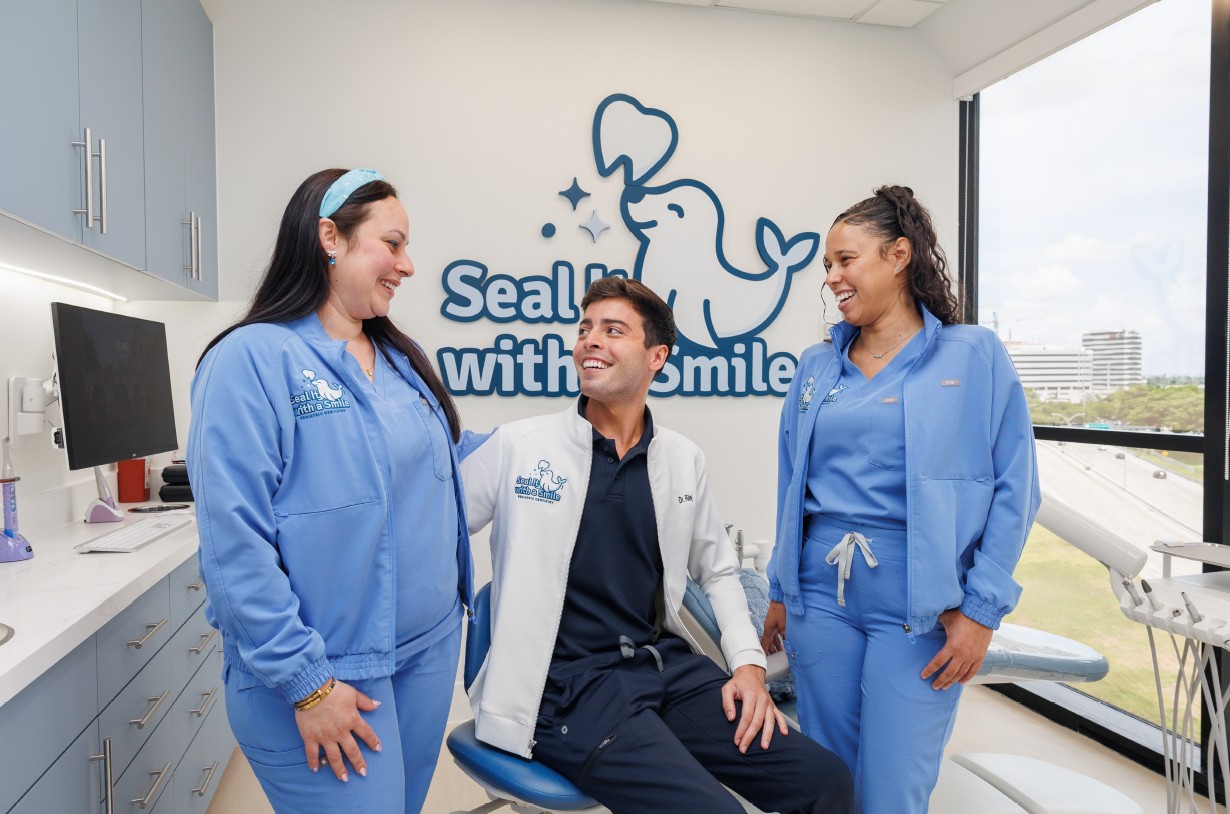
Welcome to Seal It with a Smile
We couldn’t be more thrilled to welcome you to Seal It with a Smile Pediatric Dentistry! Our practice in Aventura was created with one mission in mind: to give children a dental home where they feel safe, supported, and confident about their smiles.