.png)

Teething in Babies: A Guide for Parents


Teething is an exciting milestone, but it can also be a challenging one. If your baby seems fussier than usual, drooling more, or chewing on everything in sight, a new tooth may be on the way!
Here’s what’s normal, what’s not, and how to help your baby stay comfortable.
When Do Babies Start Teething?
Most babies get their first tooth between 6 and 10 months, but timing varies. Some children may be born with teeth and others may not see their first tooth until closer to their first birthday.
Typically, your child’s lower front teeth (bottom incisors) come in first followed by the upper front teeth. Most children have a full set of 20 baby teeth by age 3.
Common Signs of Teething
Teething symptoms are usually mild and may include:
- Increased drooling
- Chewing on hands or objects
- Mild gum swelling or tenderness
- Slight irritability
- Changes in sleep patterns
- Decreased appetite for solids
Some babies may develop a mild temperature elevation (below 100.4˚F), but higher temperatures are not caused by teething. High fever, persistent diarrhea, vomiting, rash over the body, or fatigue are not typical teething symptoms. If your child has these symptoms, it’s important to contact your pediatrician.
How to Sooth a Teething Baby
Most teething discomfort can be managed by simple, safe strategies:
- Gently massaging the baby’s gums with a clean finger
- Offering a chilled teething ring
- Using a cool, damp washcloth for your baby to chew on
If discomfort is significant, you may consider temporary oral analgesics such as infant acetaminophen (Tylenol) or ibuprofen (Motrin, only for infants over 6 months). Stop use after 1 to 2 days.
What to Avoid
- Teething tablets
- Teething gels (benzocaine or lidocaine may be harmful for children at this age)
- Teething necklaces or bracelets (choking hazard)
How Do I Care for My Baby’s New Teeth?
The moment your baby’s first tooth appears, it’s time to start brushing! Brush twice a day using a small, soft-bristled toothbrush and a smear of fluoridated toothpaste about the size of a grain of rice.
Position your baby in your lap with its head closest to you. Gently lift the lip and use small, gentle circular motions at a 45˚ angle. Be sure to clean all sides of the tooth and along the gumline for two minutes.
If another adult is available, the “knee-to-knee” position can be very helpful! Sit facing each other with knees touching; your child’ head rests in one adult’s lap while the other stabilizes their legs.
It’s completely normal for little ones to resist brushing at first. Stay calm, confident, and consistent. Sing a lullaby can make brushing feel more playful and help you keep track of time.
If your child swallows a small amount of toothpaste, the recommended rice-sized smear keeps fluoride exposure within safe and appropriate limits.
When Should We See Your Baby?
The American Academy of Pediatric Dentistry recommends a child’s first dental visit by their first birthday or within 6 months of the first tooth erupting.
Early visits allow us to:
- Check healthy tooth development
- Discuss feeding and brushing habits
- Provide guidance on fluoride-use
- Answer questions about pacifiers, thumb sucking, and more
- Establish a dental home
These early visits are gentle, educational, and designed to help your child feel comfortable in the dental setting.
Share this post
Stay Informed
Explore more blogs

August 3, 2026
Airway Health for Children: Why Breathing Well Matters
When we think about children, we often focus on teeth, nutrition, and school performance. But one of the most important (and commonly overlooked) factors in a child’s development is something much more basic: how they breathe.
August 2, 2026
Welcome to Seal It with a Smile
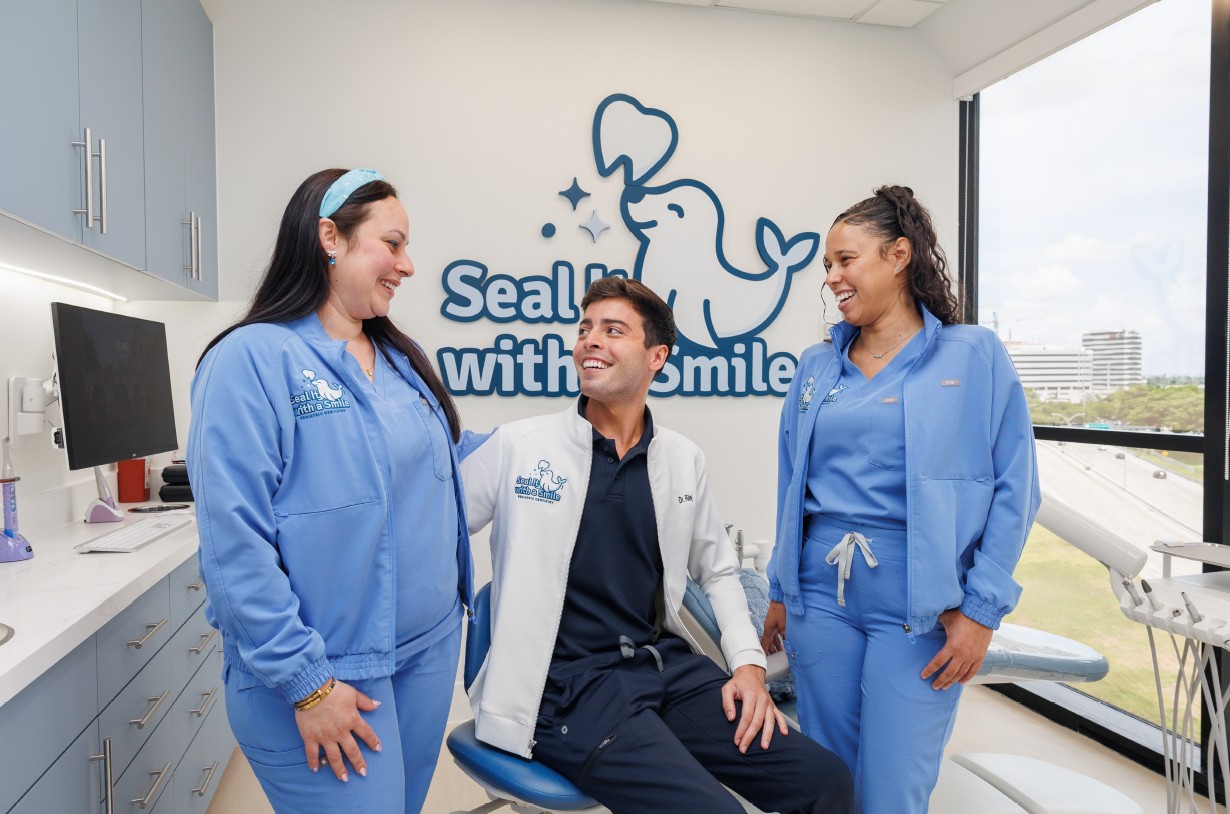
We couldn’t be more thrilled to welcome you to Seal It with a Smile Pediatric Dentistry! Our practice in Aventura was created with one mission in mind: to give children a dental home where they feel safe, supported, and confident about their smiles.

May 5, 2026
Why Baby Teeth Matter More Than You Think
It’s a very common question. After all, primary teeth (commonly referred to as baby teeth) will indeed later be replaced by adult teeth.